
Designing Gamification in Museums For Learning and Engagement
In the previous article, we explored what gamification means for museums and how it can contribute to interpretation and audience engagement. The question that follows is how it is actually designed in practice.
What are gamification mechanics?
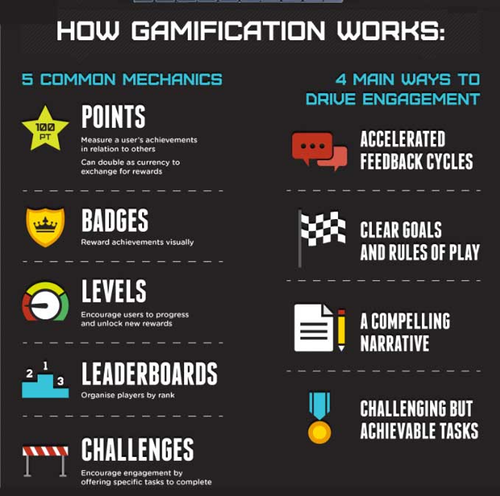
Source: Infographic from KNILT
It’s useful to start with the concept of gamification mechanics. These can be understood as the rule-based structures that shape interaction. They define what visitors can do, how they move through an experience, and how the system responds to their actions. In museum contexts, these mechanics underpin participation. Common elements include points, badges, levels and progression, challenges, quests, leaderboards, and avatars/roles. They are the backbone to structure visitors’ journey, and they can be mixed and matched to create different layers of interaction.
No matter which elements you use, there are a couple of principles to keep in mind during the design process. Effective design enables visitors to make choices, encounter challenges, receive feedback, and explore content within a coherent and compelling narrative. They determine whether an interaction feels purposeful and engaging.
How can gamification benefit learning?
Gamification mechanics not only make learning more fun, but they can also support deeper and sustainable learning by providing intrinsic motivation. Gamified experiences should not rely solely on rewards or point accumulation that generate endorphin release, which often only encourage short-term engagement; instead, they need to support the three basic psychological needs identified in self-determination theory: autonomy, competence, and relatedness. When visitors feel they have choices, are capable of progressing, and are connected to others and the environment, they are more likely to engage actively and maintain their attention.
Examples of museum gamification experiences: Diefenbunker Museum, Rijksmuseum, Jamtli Open-Air Museum and V&A
Let’s look at some examples of different gamified formats and how their mechanics are used to support deeper learning and engagement.
1. Immersive Narrative and Challenge - The Diefenbunker and Rijksmuseum
How escape rooms built around immersive storytelling and puzzle-solving can encourage active interpretation and deeper engagement
Escape rooms have become an increasingly popular format in museums. The Diefenbunker in Canada was among the earliest institutions to adopt this approach, transforming its Cold War bunker into a fully realised escape experience.
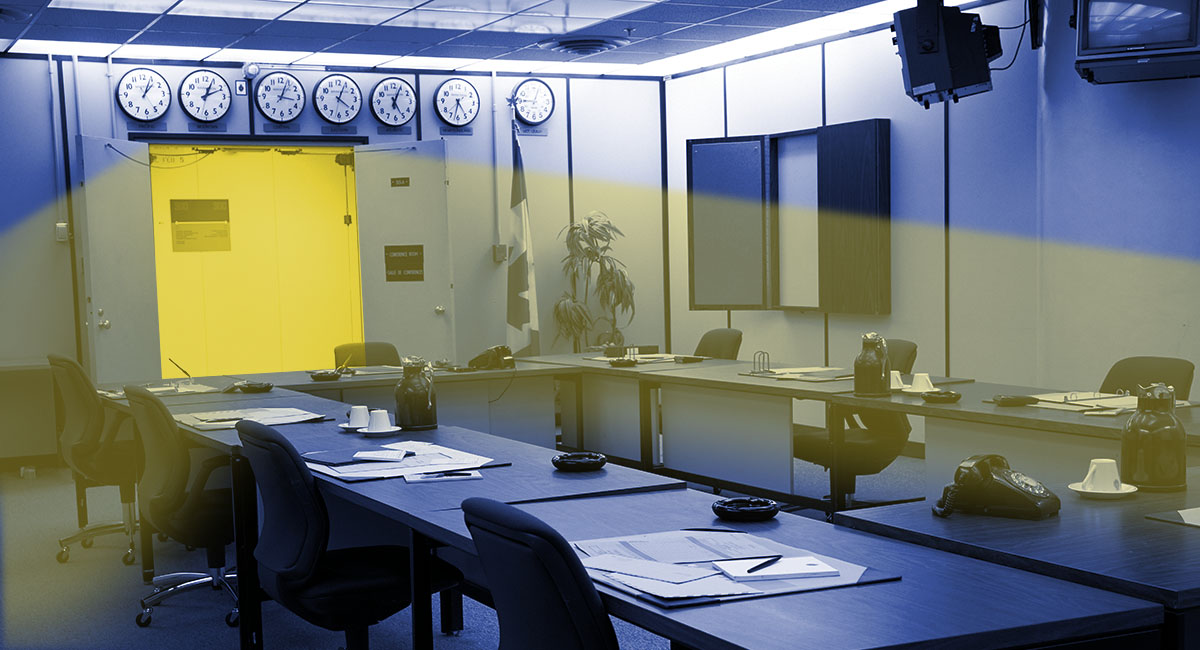
Source: Ottawalife Magazine
Visitors are placed within a narrative scenario centred on a nuclear threat and must solve a series of puzzles under time pressure. Here, mechanics such as time constraints, challenges, and narrative immersion work together to create a strong sense of urgency and engagement.
A more recent and high-profile example is the collaboration between the Rijksmuseum and the design studio Sherlocked. In this case, the museum introduced a narrative-driven escape experience embedded within its own galleries. Visitors follow a fictional storylineinvolving a museum employee who uncovers clues pointing to a hidden secret society, and are invited to solve puzzles that require close observation of artworks and the surrounding space.
The Rijksmuseum example shows how the mechanics are directly tied to interpretation. Rather than existing as an isolated “game layer,” the puzzles are designed to guide attention, directing visitors to look more closely at details that they might otherwise overlook and to engage more deeply with the collection.
Designing these types of experiences requires attention to narrative scaffolding. Structuring challenges in a way that they gradually increase in complexity and accommodate different levels of ability helps maintain an optimal balance between difficulty and accessibility.
This avoids frustration and disengagement, while reinforcing a sense of progression. In some cases, progression systems can also support repeat visits, allowing visitors to unlock new layers of the experience over time, which shifts engagement from a one-off activity to repeat visits.
2. Storytelling and Role-Play - Jamtli Open-Air Museum
How the open-air museum Jamtli in Sweden created a time-travelling storytelling
Storytelling combined with role-play introduces an element of perspective-taking, where visitors "put themselves in the shoes" of historical figures, to better comprehend their subjective experience.
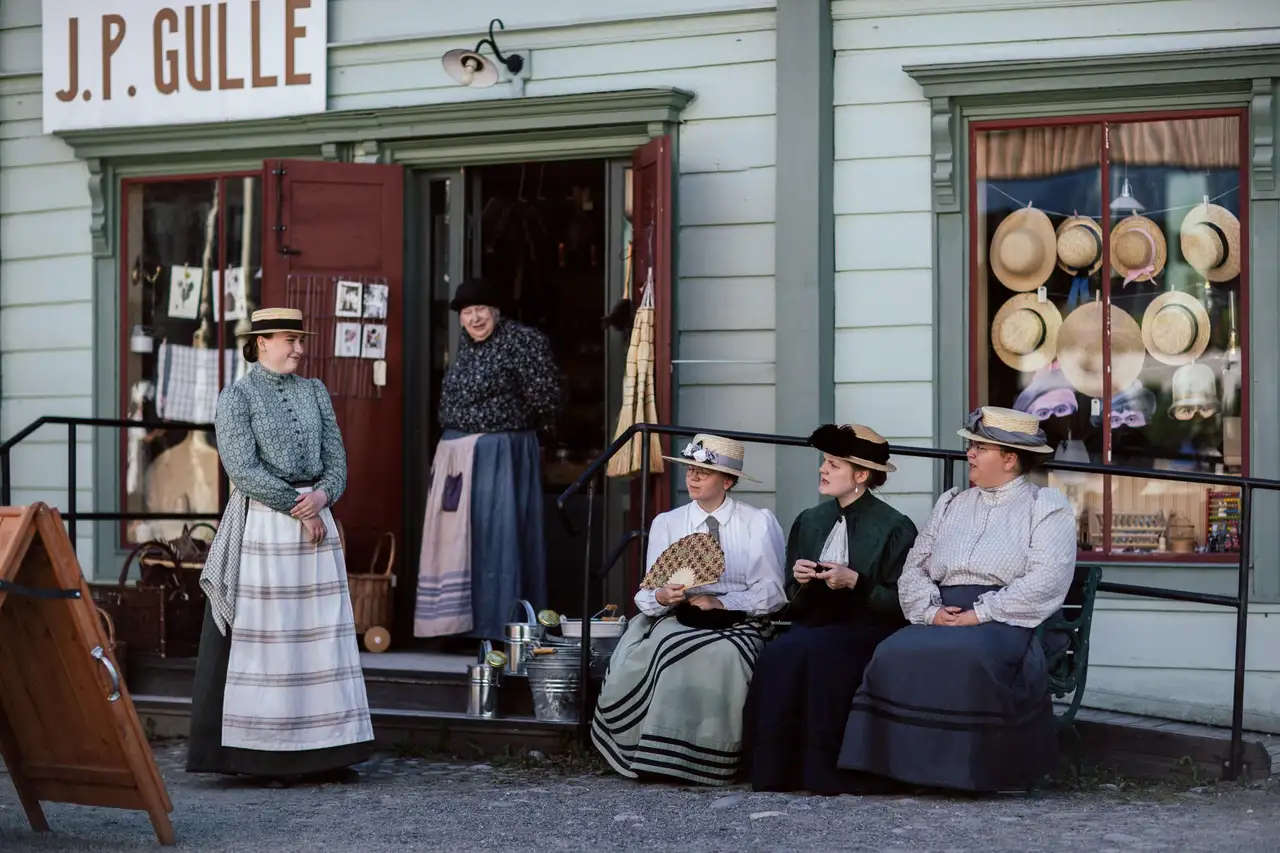
Photo Curtesy: Joaklind/Jämtland Härjedalen Turism
At Jamtli in Sweden, an open-air museum organised as a historical village, this is realised through a “time-travelling passport.” Visitors move between different time periods, collecting stamps by taking part in activities and re-enacting historical events. The experience is shaped by narrative framing, exploration, and interactive participation through role-playing, yet it does not rely on digital technology. This demonstrates that gamification is not inherently tied to digital tools, but to the design of interaction itself.
3. Feedback and Rewards - V&A X Minecraft
How V&A’s Minecraft workshop reinforces learning and participation through continuous feedback, collaboration, and tangible rewards in a virtual environment
Feedback and reward mechanisms are among the most essential elements of gamification, as they reinforce a participant’s sense of progress and competence, strengthening their belief in their ability to succeed. This sense of self-efficacy is a key driver of continued engagement and learning.
An example of this can be seen in a digital workshop developed by the Victoria and Albert Museum, where participants were invited to redesign the museum’s Exhibition Road entrance using a custom-built environment in the video game Minecraft. Through a virtual workshop hosted on a dedicated server, participants could explore the space, experiment with architectural ideas, and develop alternative designs using pre-built digital assets.
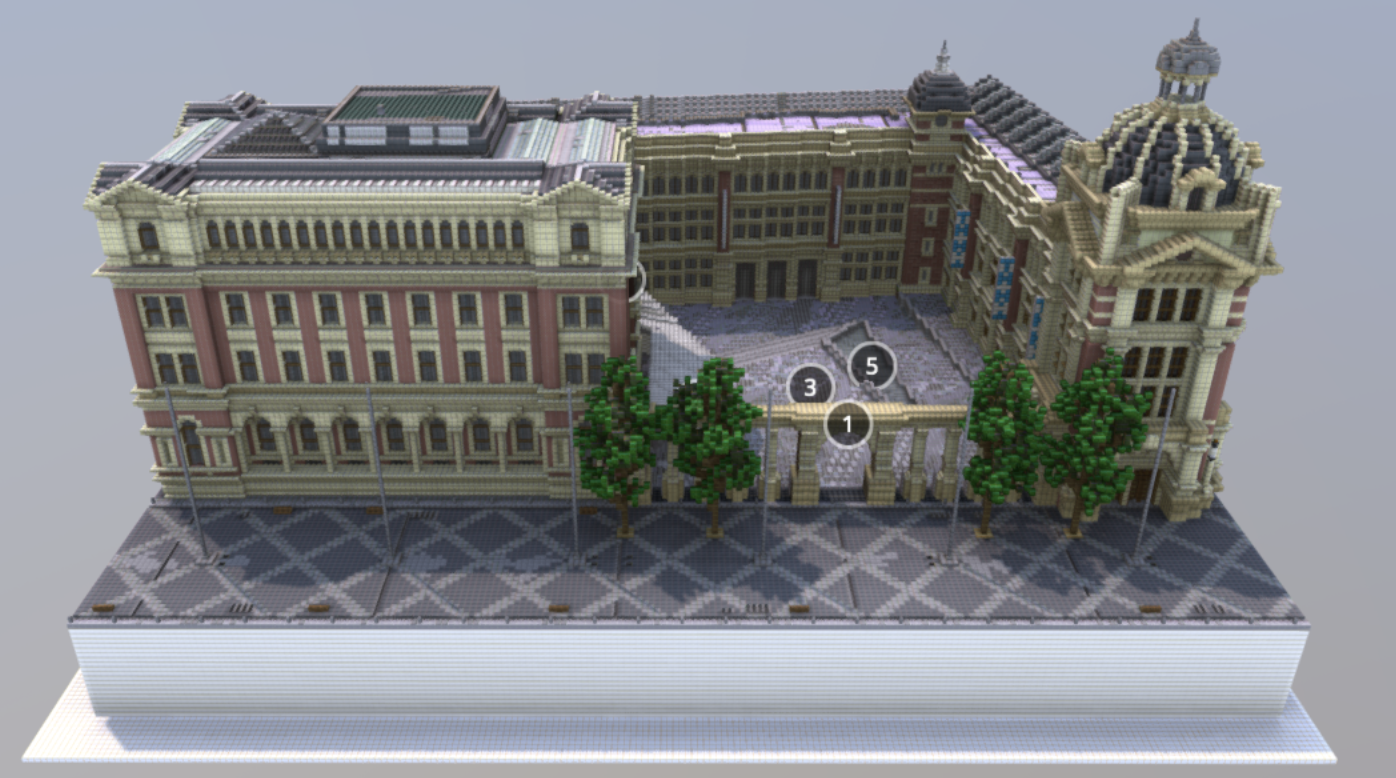
Source: V&A
The experience combined several layers of feedback. Participants received immediate visual feedback as their designs took shape in real time, and collaboration with others enabled comparison, iteration, and shared learning. The most successful design in the end was rewarded with a physical 3D-printed model of the Minecraft creation. The reward validated the participants’ efforts and translated a digital outcome into a tangible object. More importantly, the feedback through building, testing, and collaboration during the design process not only contributes to sustaining engagement but also facilitates creativity, where the participants can compare ideas and get inspired.
Across the examples discussed, an important dimension that can be observed is social and collaborative learning. Through team-based activities, shared challenges, and peer learning, visitors can interact, exchange ideas, and learn from one another. Social mechanics help broaden perspectives by exposing visitors to different interpretations of the same content. At the same time, they shift the museum visit from an individual activity to a more collective experience.
What role does technology play in the museum experience?
Across the examples discussed, technology functions primarily as an enabler, supporting more immersive, responsive, and adaptive forms of engagement. It allows museums to layer interaction onto interpretation, whether through augmented reality, multiplayer environments, or digital platforms that respond to visitor input in real time. In some cases, it can also extend the visitor journey beyond the physical visit, creating continuity before and after the museum experience.
However, technology does not inherently create engagement. While technology delivers the experience, it is the underlying mechanics that shape how visitors participate, make decisions, and construct meaning, as the Jamtli example demonstrates,
There are cases where technology becomes the primary carrier of the experience rather than a supporting layer. The Victoria and Albert Museum Minecraft workshop is a good example of this, where the entire experience takes place within a digital environment. Here, technology is redefining museum engagement, creating a space for co-creation, experimentation, and collaboration that would be difficult to replicate physically.
Building on this perspective, Podego is exploring how gamification can be integrated into interactive audio guides. Rather than relying on complex interfaces, we focus on layering interaction within a familiar format. By introducing mechanics such as exploration, scavenger hunts, and light competition through leaderboards, audio guides can shift from linear narration to more participatory experiences.
This work is developed in close collaboration with museum educators and youth panels, ensuring that the use of technology remains grounded in both institutional goals and audience needs. In this sense, technology is not the starting point, but a tool that supports a broader design approach centred on engagement, learning and interpretation.
If you missed the previous article, you can read it here: “Gamification in Museums & Heritage Sites: Beyond the Buzzword”. Let us know what you think in the comment!
References:
Banerjee, P. (2022, August 31). Gamification in Education Complete guide. Pickcel Digital Signage. https://www.pickcel.com/blog/gamification-in-education-complete-guide/
Beerda, J., & Beerda, J. (2026, January 17). 12 Gamification examples transforming the visitor experience in museums. The Octalysis Group. https://octalysisgroup.com/2020/04/12-gamification-examples-transforming-the-visitor-experience-in-museums/
Gamifying the Museum: How Play is Shaping the Future of Cultural Spaces. (2025, April 15). https://igameproject.eu/2025/04/15/gamifying-the-museum-how-play-is-shaping-the-future-of-cultural-spaces/
García-Milon, A., Tom Dieck, M. C., Jung, T., & The Author(s). (2026). Gamification in digital museum experiences: an affordance perspective. In Current Issues in Tourism [Journal-article]. https://doi.org/10.1080/13683500.2026.2657925
Kumar, J. M. and Herger, M. (2013, June 25). Chapter 6: Mechanics. IxDF - Interaction Design Foundation. https://ixdf.org/literature/book/gamification-at-work-designing-engaging-business-software/chapter-6-58-mechanics
Pappas, C. (2025, April 28). The Science and Benefits of Gamification in eLearning. eLearning Industry. https://elearningindustry.com/science-benefits-gamification-elearning
Rodley, E. (2018, March 5). Peeling the Onion, Part one: Gamification. Thinking About Museums. https://thinkingaboutmuseums.com/2018/03/05/peeling-the-onion-of-gamification-part-one/
Richardson, J. (2024, December 19). How museums are using minecraft to gamify learning experiences. MuseumNext. https://www.museumnext.com/article/minecrafting-the-museum/
