Gamification in Museums & Heritage Sites: Beyond the Buzzword
Gamification has become a familiar term in museum discourse, often linked to digital innovation and audience engagement. Yet it remains one of the most contested ideas in museum practice.
The concern is understandable: if museums are seen as spaces of cultural memory, learning, and reflection, where does something associated with play and fun fit in?
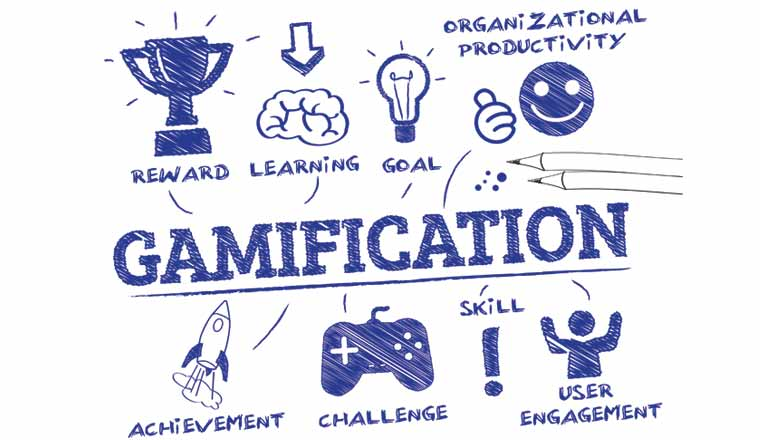
Gamification Definition; Source: Trueffelpixon Shutterstock.
The risks of gamification
At its core, gamification means using game elements, such as challenges, rewards, participation, and progression, in non-game contexts to motivate and engage people. In museums, however, it is too often reduced to the idea of simply “making things fun.”
This reduction is part of what makes the concept controversial. Many cultural institutions worry that playful engagement could commercialise or ‘cheapen’ the museum experience.
In exhibitions dealing with sensitive histories, emotional narratives, or artefacts that have a ‘traumatic past’, game-like interaction can seem at odds with the seriousness, care, and respect these subjects demand.
Yet this critique is also too narrow.
We believe gamification is not about turning museums or heritage sites into games, nor about replacing curatorial interpretation with entertainment.
At its best, it offers opportunities that can make storytelling more vivid and invite visitors into a more active relationship with what they encounter. Rather than asking visitors only to observe, it can prompt themto interpret, decide, explore, and reflect.
Gamification of museum experiences for young audience through digital technologies
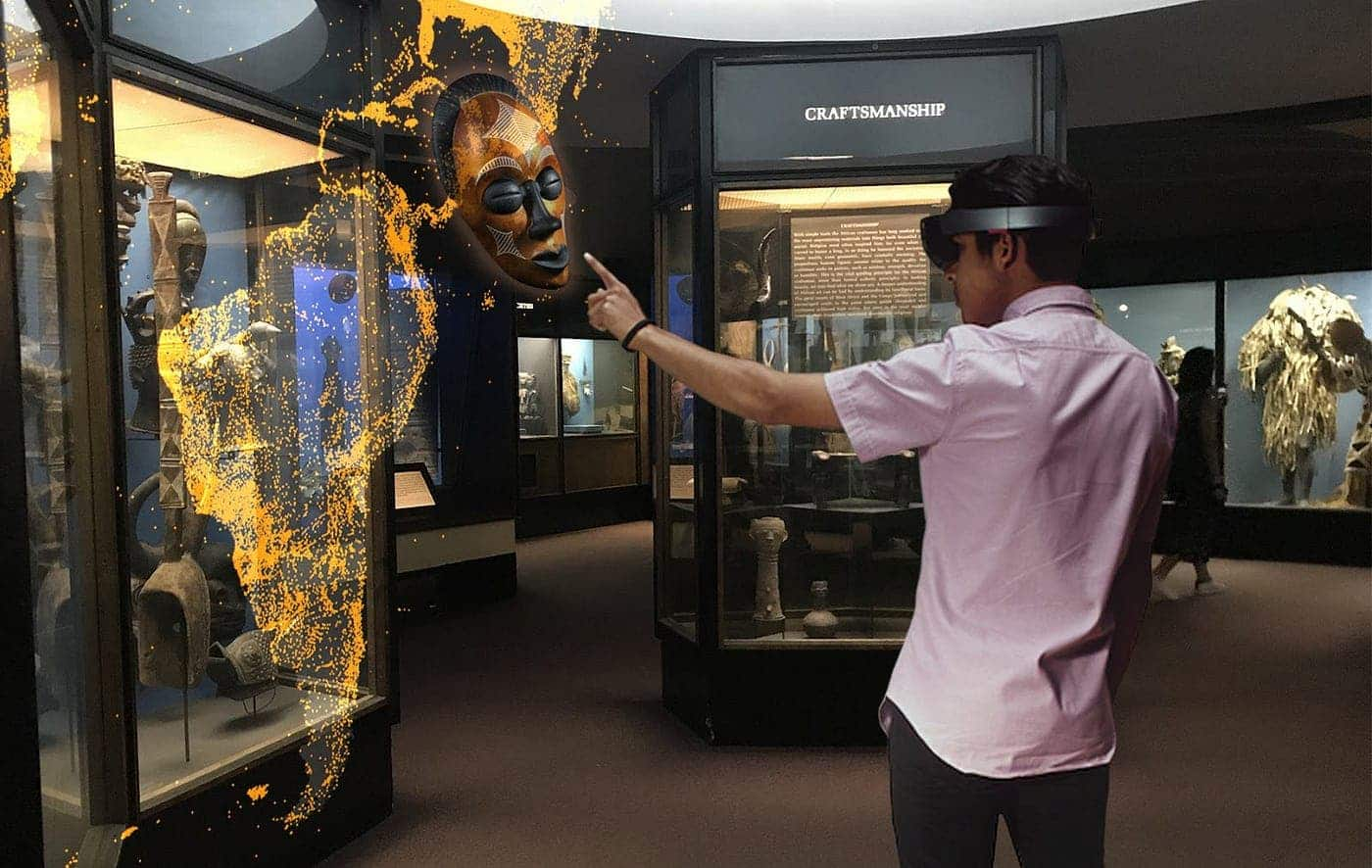
VR engagement in museums; Image Courtesy of American Museum of Natural History
This shift matters especially when thinking about younger audiences. Museums have long relied on mediated formats such as guided tours and linear audio guides, which offer depth and structure. But they also assume a mode of engagement that may feel increasingly out of step with how the majority of younger visitors encounter information: interactively, participatively, and across multiple media.
For this reason, many museums are experimenting with gamification and interactive technologies, from augmented reality to Minecraft and live-action role-play.
When done well, these approaches can increase participation and dwell time while making visits more personal and memorable. But their value does not lie in novelty alone. The risk is that gamification becomes a superficial gimmick: an attraction layered onto an exhibition without deepening understanding.
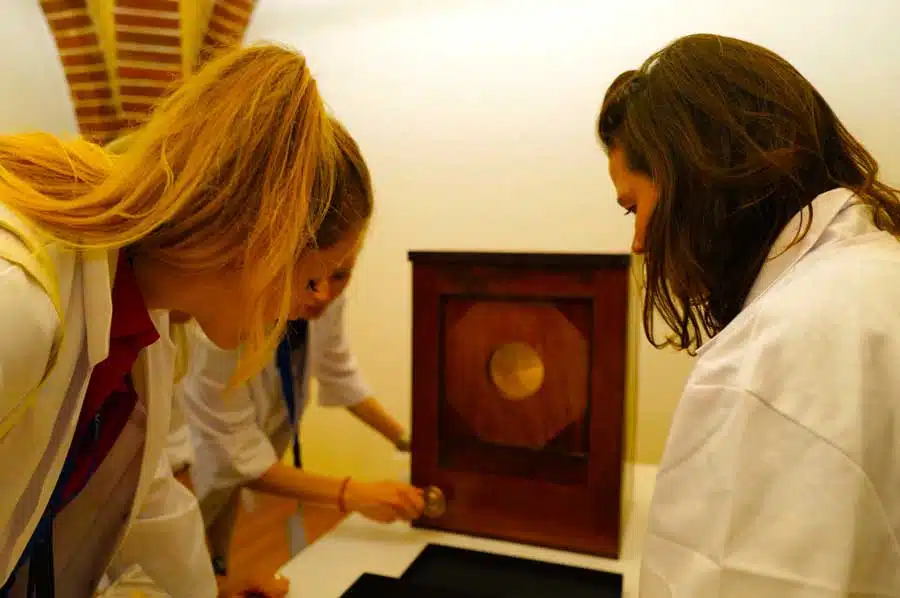
Escape Room Experience at Rijksmuseum Amsterdam; Source: MuseumNext
That is why successful gamification must remain tied to the museum’s core mission.
It should function as an extension of the institution’s educational and cultural purpose, not as a distraction from it. Some practitioners describe this as finding the right “dose” of gamification: enough to activate engagement, but not so much that the game overshadows the object, artwork, or exhibition narrative itself.
Successful implementations, such as puzzle-based experiences at the Rijksmuseum, work precisely because they encourage visitors to look more closely and analyse what they see.
If that is the challenge, then design becomes crucial. Museums need to create experiences that are meaningful as well as engaging, and that respond to the expectations of young audiences without flattening the complexity of the material.
This is where co-creation becomes essential in designing gamified experiences in museums and heritage sites.
Designing meaningful gamified experiences requires collaboration between curators, educators, designers, and technical teams from the outset. Just as importantly, it requires involving young people themselves, not simply as target users, but as contributors to the design process.
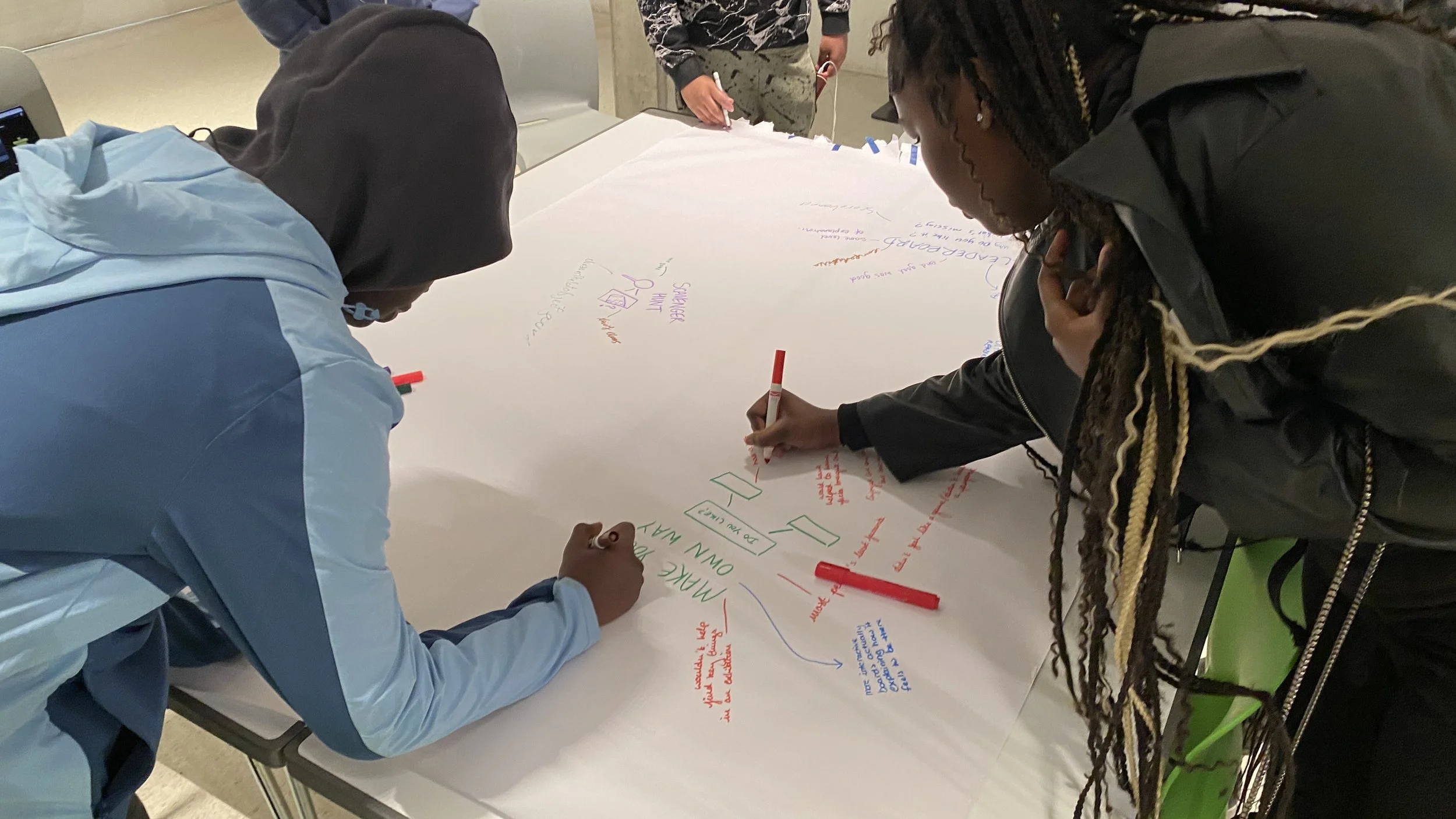
Focus Group Discussion with young people held by a museum partner and Podego in April 2026
Seen this way, gamification is not a threat to museum values but a design question: how can museums & heritage sites create forms of participation that deepen, rather than dilute, engagement with culture and heritage?
Coming next: what does gamification actually look like in a museum and cultural sites, and which mechanics work best in different contexts?
Written by Shuyun Zi
References:
Associate, Cuseum. “Implementing Gamification in Museums - Guide | CUSEUM.” Cuseum, July 28, 2025. https://cuseum.com/blog/implementing-gamification-in-museums.
MuseumNext. “Game on: The Playful Revolution Transforming Museums.” MuseumNext, May 28, 2025. https://www.museumnext.com/article/game-on-the-playful-revolution-transforming-museums/.
Richardson, Jim. “Unlocking Curiosity: Transforming the Rijksmuseum with an Escape Room Experience.” MuseumNext, September 5, 2024. https://www.museumnext.com/article/unlocking-curiosity-transforming-the-rijksmuseum-with-an-escape-room-experience/.
Çetin, Özgül, and Fethiye Erbay. “Gamification Practices in Museums.” Journal of Tourismology. Vol. 7, 2021. https://doi.org/10.26650/jot.2021.7.2.1017009.
Coelho, A., Cardoso, P., Van Zeller, M., Santos, L., Raimundo, J., & Vaz, R. (2020). Gamifying the museological experience. CEUR Workshop Proceedings, 2618, 5-8.