SAKA Museum case study: Bridging museum voice and audience engagement through multilingual audio storytelling
Source: SAKA Museum
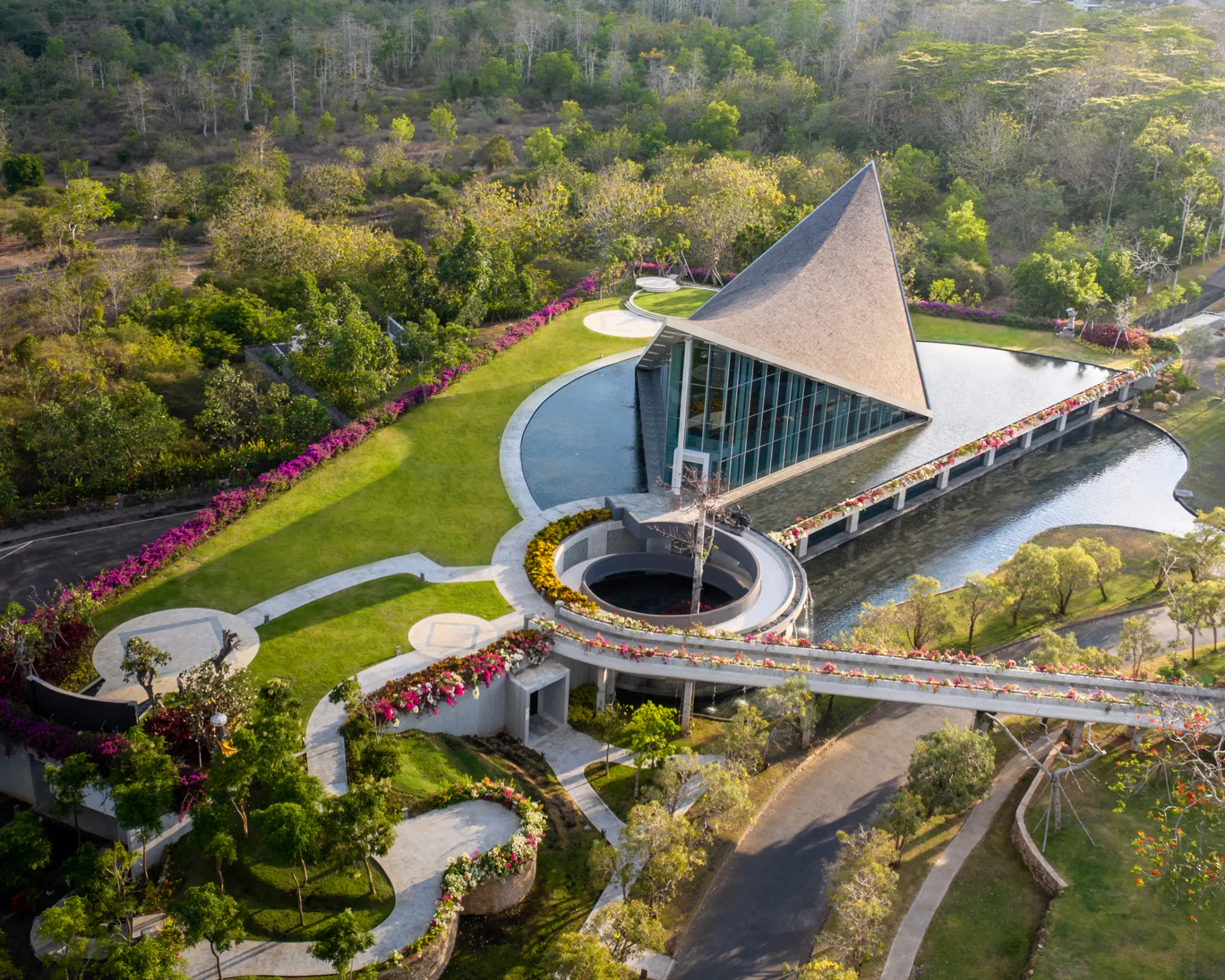
In the heart of Bali, SAKA Museum is a place to feel and experience Balinese heritage, specifically the Saka calendar and traditions around Balinese New Year as they live today.
Since opening its doors in 2023, the museum has become a destination for international visitors seeking a connection to Bali that goes deeper than the landscape.
Central to this experience are the gallery sitters, local guides known for their warm, personal approach to storytelling. However, as the museum welcomed a more global audience, a challenge emerged: the language barrier and the limited number of gallery sitters available to host every guest personally.
How do you maintain that personal connection when language barriers and scale get in the way?
That is where Podego stepped in. Our goal was to adapt the warmth of a local guide into an intuitive, multilingual audio experience. We wanted visitors to hear the heritage of Bali as if a local gallery sitter were walking beside them.
As a museum situated within a resort environment, SAKA carries a unique set of challenges. One of the most persistent is language. Our visitors arrive with different cultural references, ages, and expectations. Yet our vision stays the same: to spark curiosity about Balinese culture in a way that feels contemporary and personal…Through our collaboration with Podego, we now have a flexible and responsive tool that’s close to our ethos, adapts as the museum evolves, and complements the personal touch that defines SAKA.
- Tantri Arihta Sitepu as Visitor Manager of SAKA Museum
Since the launch in December, the audio guides have obtain these results:
High visitor engagement: 28% of daily visitors opted to use the audio guides, which outperformed the industry benchmark of 10%
Diverse audience: Visitors can choose from a total of six languages. Mandarin is the most requested language (65%), followed by English (13%) and Korean (7.4%).
Youth appeal: 38% of users chose the "Young Explorer" storytelling style, proving the demand for “younger” storytelling style.
In this article, we break down our process for creating these audio guides. We share how we collaborated closely with SAKA museum’s curators to craft an entire collection of thematic audio guides while capturing their unique voice and signature, ensuring their visitors leave with an understanding of Balinese culture.
The process: close collaboration with museum curators
Creating an authentic audio accompaniment required a deep, eight-week collaboration with the museum’s curatorial team. We worked closely with the museum’s curatorial team throughout the process.
Scripting with Curators
They provided us with the collection which is the starting point to write the script. We also rely on the curators to show us what they knew to be the most significants facts and stories to highlight. Their expertise formed the foundation of our scripts, ensuring every word remained true to the museum’s identity.
Native Speaker Review
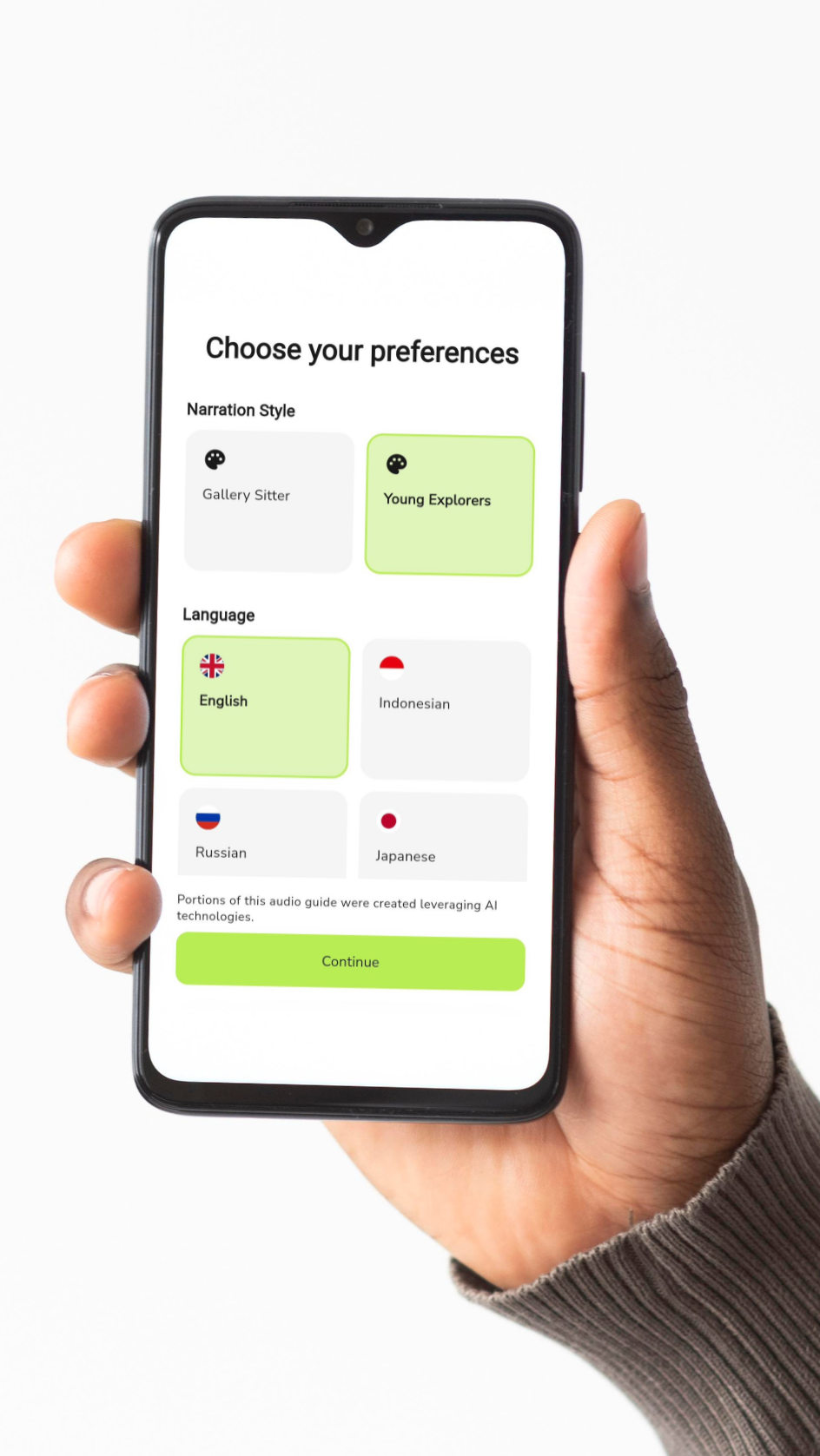
Over the course of eight weeks, we released the first phase, covering 13 stops across the museum’s ground floor. To ensure the highest level of cultural and linguistic accuracy, we worked hand-in-hand with curators and native speakers to review every written script and every audio track produced with Text-to-Speech. This rigorous review process ensured that whether a visitor listens in Bahasa Indonesia, Mandarin, Korean, English, Russian, or Japanese, the narration feels natural, accurate, and respectful of the sacred heritage it describes.
Designing the Visitor’s Flow
We proposed a visitor flow in the museum, suggesting stops to create a cohesive narrative. These were then translated into organized Playlists within the web-app.
Defining Storytelling Styles
Podego’s allows visitors museum to unlock opportunities to diversify more than languages, also their storytelling styles. Because SAKA Museum attracts many families, the curators wanted to provide two distinct identities for every collection:
Gallery Sitter style for adults. SAKA Museum wanted to create audio guides that could connect with international visitors while still maintaining their unique identity. Thereby personalizing the experience of visitors by expanding the museum’s gallery sitter storytelling style into their audio guides.
Young Explorers style for youth. Since many visitors are families, we created a style that makes complex cultural concepts accessible and engaging for younger audience. By using simpler vocabulary and a more enthusiastic, "older sibling" tone, we transformed the educational content into a relatable story.
This dual-track approach ensures that whether a visitor is a solo scholar or a family with children, the heritage of Bali remains resonant and easy to understand.
How to stay authentic with Text-to-Speech
In order to capture the museum identity in the audio, first, we had to absorb its essence. And the answer to that question lies mostly in the SAKA calendar and the Balinese traditions that the museum showcases. It is all centred around Nyepi (the Balinese New Year and day of silence) and the rituals surrounding this calendar. This meant our voices and style needed to embody that sense of calm, balance, and contemplation. There were a few challenges along the way and a few creative solutions.
The Nuance of Pronunciation
During the process, we learned that generated accents are great in a general sense. But when you start narrowing down on specificity, like regional accents, for instance, it becomes much more difficult to achieve satisfying results with text-to-speech.
We then created a dictionary of these words and the spelling required to achieve the correct pronunciations and integrated that into our voice models.
Voice choice
Choosing the right voice is paramount, and it took classic trial and error. For the English language voices, we sought a voice that felt authentic to the region, as if it were spoken by a local. The Gallery Sitter voice was also meant to capture the calm and serene essence of the museum’s gallery sitters themselves.
We also discovered the power of perception. By simply renaming our youth-focused voice from "Kids" to "Young Explorers," we saw a 20% uptick in engagement. We didn't alter the script or the audio, just the way the audience identified with the persona.
Conclusion: Agility in Storytelling
Alongside that process, we built and launched a Web App that museums can use as a Content Management System (CMS). For the visitor, this means there is no app to download.
The most important lesson from our partnership with SAKA Museum is that an audio guide should never be "static." But one thing is now certain and demonstrable. Through Podego, the museum can reflect on the audio guide’s real-time performance data and improve the published audio on the go.
You can be agile and iterative until you find that sweet spot that all your listeners enjoy.